Home / All Trades / Wind Turbine Technician
Career Profile · Trades

Wind Turbine
Technician

Salary · Training · Career Path · 2024 Data
$62,580
Median annual salary
BLS · 2024
11K
Job growth 2024–2034
BLS — 2nd fastest growing
60%
Jobs nationwide (growing)
BLS · 2024
12 mo
Certificate program
Trade school path
$80K+
Top earner ceiling
BLS top 10%
Programs near you have limited open seats
Start Your Wind Turbine Career
Free · No commitment · Match with programs near you
You are in.
We will match you with programs near you. Check your email within 1 business day.
Salary data

What Wind Turbine Technicians Actually Earn

Median annual salary
$62,580
Second-fastest growing occupation in the US
Top 10% annual salary
$88,090+
Experienced techs at major wind farms
Entry level
$49,110
First-year technician helper wage
Job growth rate
$30.09
BLS 2024–2034 — second fastest growing occupation
Entry-level wind tech
$49,110
Median wind tech
$62,580
Top earner wind tech
$88,090
Avg 4-yr degree salary
$65,677
Wind turbine technician is the second-fastest growing occupation in the BLS database at 60% projected growth through 2034. The US wind energy capacity is expanding rapidly, and every turbine needs a trained technician to keep it running — from hundreds of feet in the air.

Sources: BLS OES May 2024 · SOC 49-9081. Individual results vary by employer, location, and experience.

Texas median salary
$65,000
Nation’s largest wind energy market
Texas top 10%
$90,000+
Senior techs at major TX wind farms
Entry level in Texas
$42,000
First-year tech — TX wage level
TX no income tax
Advantage
Higher effective take-home
West TX wind techs
~$65,000
Panhandle wind techs
~$62,000
South TX wind techs
~$60,000
Texas-specific: Texas generates more wind energy than any other state — by a wide margin. The Permian Basin and West Texas wind corridor, the Panhandle, and emerging Gulf Coast offshore wind developments are all creating sustained demand for wind turbine technicians. No state wind tech license is required — GWO safety certification and manufacturer credentials are the recognized standards.

Sources: BLS OES May 2023 TX state data · CareerOneStop. Regional estimates based on available market data.

Iowa median salary
$61,000
Second-largest wind market by penetration
Iowa top 10%
$85,000+
Senior techs at major Iowa wind farms
Entry level in Iowa
$39,000
First-year tech — IA wage level
IA wind penetration
60%+
Iowa generates 60%+ of electricity from wind
Central Iowa wind techs
~$61,000
Northwest Iowa wind techs
~$59,000
Iowa-specific: Iowa generates more than 60% of its electricity from wind — one of the highest percentages of any state. The density of wind farms across northern and western Iowa creates strong localized demand for wind turbine technicians. Iowa State University and Hawkeye Community College both offer wind energy programs.

Sources: BLS OES May 2023 IA state data · American Wind Energy Association.

Training paths

How to Become a Wind Turbine Technician

Three ways in.
  • Wind turbine technology certificate 12 months. Programs are often co-developed with major wind energy companies.
  • Electrician + wind specialization Stronger electrical foundation. Many experienced techs come from this path.
  • Military technical MOS Electrical, mechanical, and aviation maintenance MOS transfer directly. GI Bill covers wind certificate programs.
See the full wind turbine technician training requirements
Your trade-school advantage
Ready to see your $187K path?
See programs near you that get you there.
See programs near you
Day in the life What the Job Actually Looks Like
+
Day in the life

What the Job Actually Looks Like

6:00 AM
Pre-climb safety check
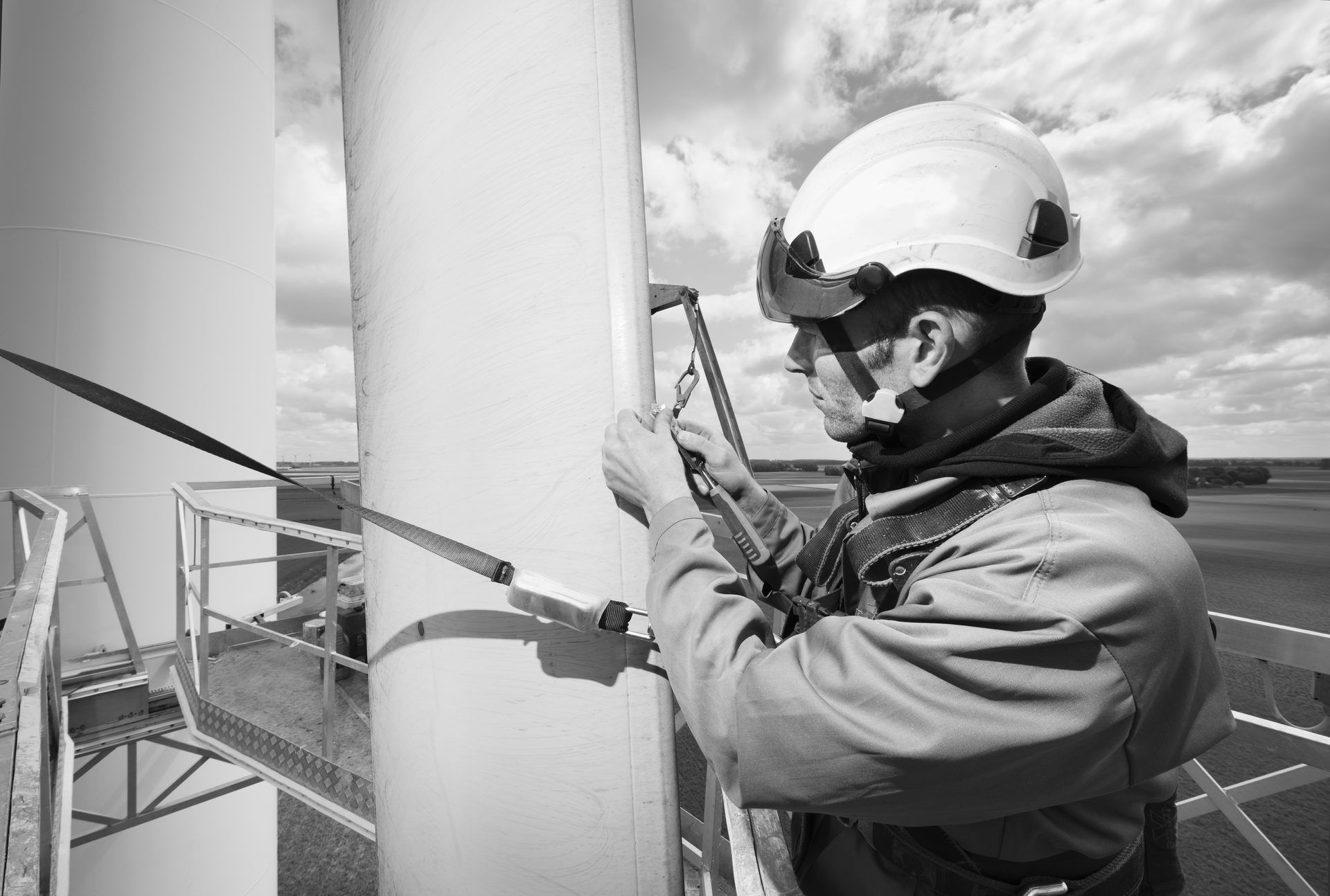
Review the day’s work orders, check climbing gear and safety equipment, complete the pre-task planning form. Turbine climbing is a high-consequence activity where safety is non-negotiable.
7:00 AM
Turbine climb and inspection
Climb to the nacelle — often 250–350 feet above ground. Inspect mechanical components, check fluid levels, and run diagnostic software on the turbine controller.
9:00 AM
Scheduled maintenance or repair
Completing the planned maintenance task — blade inspection, gearbox oil change, generator brush replacement, or control system software update.
12:00 PM
Lunch at the turbine base
30-minute break. Review afternoon assignments. Wind farms are remote — you often bring lunch because the nearest town is 30+ miles away.
1:00 PM
Second turbine or corrective work
Respond to a fault alarm at another turbine, or complete a repair flagged during the morning inspection. Corrective maintenance requires fast diagnosis to restore production.
4:00 PM
Documentation and drive back
Log the day’s maintenance activities in the CMMS, return tools, and drive back to the shop. Remote sites mean significant drive time each day.
What you will need Skills That Make a Great Wind Turbine Technician
+
What you will need

Skills That Make a Great Wind Turbine Technician

Comfort with extreme heights
Wind turbine technicians climb 250–350 feet routinely. This isn’t just height tolerance — you need to be genuinely comfortable working at the top of a structure the height of a 30-story building.
Electrical systems expertise
Turbines are complex electrical systems. Reading schematics, diagnosing control systems, and working with high-voltage components are daily skills.
Mechanical aptitude
Gearboxes, pitch systems, yaw drives, and hydraulic systems all require mechanical diagnosis and repair skills. Wind techs are electrical-mechanical hybrids.
Remote work independence
Wind farms are remote. Technicians often work in pairs with limited supervisor contact. Self-directed problem-solving and communication with the control room are essential.
Physical conditioning
Climbing hundreds of feet, carrying tools, and working in confined nacelle spaces in all weather conditions. Physical fitness is a job requirement, not just an advantage.
Safety discipline
Working at extreme heights with rotating machinery and high-voltage systems. Fall protection, lockout-tagout, and arc flash procedures are followed without exception on every climb.
Job market outlook The Market for Wind Turbine Technicians in 2026
+
Job market outlook

The Market for Wind Turbine Technicians in 2026

Projected job growth 2024–2034
60%
BLS — second fastest growing US occupation
IRA investment driver
Massive
Inflation Reduction Act fueling wind expansion
Current wind tech jobs in the US
11K
BLS · 2024 — growing rapidly from smaller base
AI displacement risk
None
Physical climbing work cannot be automated

Wind turbine technician is the second-fastest growing occupation in the BLS database at 60% projected growth through 2034. Federal clean energy investment and state renewable portfolio standards are creating a decade-long pipeline of new wind farm construction that will require thousands of new technicians.

The existing wind fleet is also aging — turbines installed in the early 2000s are now reaching major maintenance and repowering milestones. This creates a maintenance demand layer on top of new installation growth that sustains employment even during periods of slower new construction.

Remote work and travel tolerance are real factors in this career. Wind farms are typically located in rural areas. Technicians either live near their farms or travel on a rotation schedule. The trade-off is strong wages, low competition, and some of the most dramatic job sites in any trade.

Common questions Wind Turbine Technician FAQs
+
Common questions

Wind Turbine Technician FAQs

Wind turbine technicians earn a national median of $62,580 per year according to BLS 2024 data. Entry-level techs start around $40,000, while experienced technicians at major wind farms earn $80,000–$90,000+. Texas and the Great Plains states are the strongest markets with wages above the national median.
A focused 12-month certificate program at a technical college or wind energy school gets you job-ready for entry-level technician positions. Manufacturer-specific training through Vestas, GE, or Siemens Gamesa takes additional time and is typically employer-sponsored after hiring.
It depends on the employer. Some companies staff techs at permanent wind farms close to home. Others use traveling technician models where you go where the work is. Traveling techs typically earn more and receive per diem on top of salary. Wind farm locations tend to be rural — Texas, Iowa, Oklahoma, Kansas, Wyoming.
It carries significant hazards: falls from height, electrical shock, and entanglement with rotating machinery are the primary risks. The industry has invested heavily in safety systems and training — OSHA fall protection and GWO safety certification are standard requirements. Technicians who follow procedures consistently have safe careers.
The Global Wind Organisation Basic Safety Training (BST) is the international safety standard for wind turbine work. It covers First Aid, Manual Handling, Fire Awareness, Working at Heights, and Sea Survival. Most wind energy employers require GWO certification. Many wind tech programs include GWO training in their curriculum.
Earn more

Similar Trades That Pay More

What people are saying
The salary data on this site is more detailed than anything I found elsewhere.
AdamGeorgia
I sent this to my nephew who’s considering trades — incredibly thorough.
TonyFlorida
Finally a site that gives real numbers without trying to sell you something.
MattPennsylvania
Your Wind Turbine Career
Starts Here.

We will match you with wind turbine technician programs near you. Free for workers. Always.

Take the Career Quiz → Browse All Trades
START YOUR TRADE CAREER FREE MATCHING · 2 MIN · NO SPAM
Get Matched Free →