Home / All Trades / Millwright
Career Profile · Trades

Millwright

Salary · Training · Career Path · 2024 Data
$65,170
Median annual salary
BLS · 2024
40K
Jobs nationwide
BLS · 2024
13%
Job growth 2024–2034
BLS projection
12 mo
Program option
Trade school path
$90K+
Top earner ceiling
BLS top 10%
Programs near you have limited open seats
Start Your Millwright Career
Free · No commitment · Match with programs near you
You are in.
We will match you with programs near you. Check your email within 1 business day.
Salary data

What Millwrights Actually Earn

Median annual salary
$65,170
Skilled industrial maintenance trade
Top 10% annual salary
$93,740+
Senior millwrights and industrial supervisors
Entry level
$45,100
First-year apprentice or helper wage
Hourly median
$31.33
National average across all experience levels
Entry-level millwright
$45,100
Median millwright
$65,170
Top earner millwright
$93,740
Avg 4-yr degree salary
$65,677
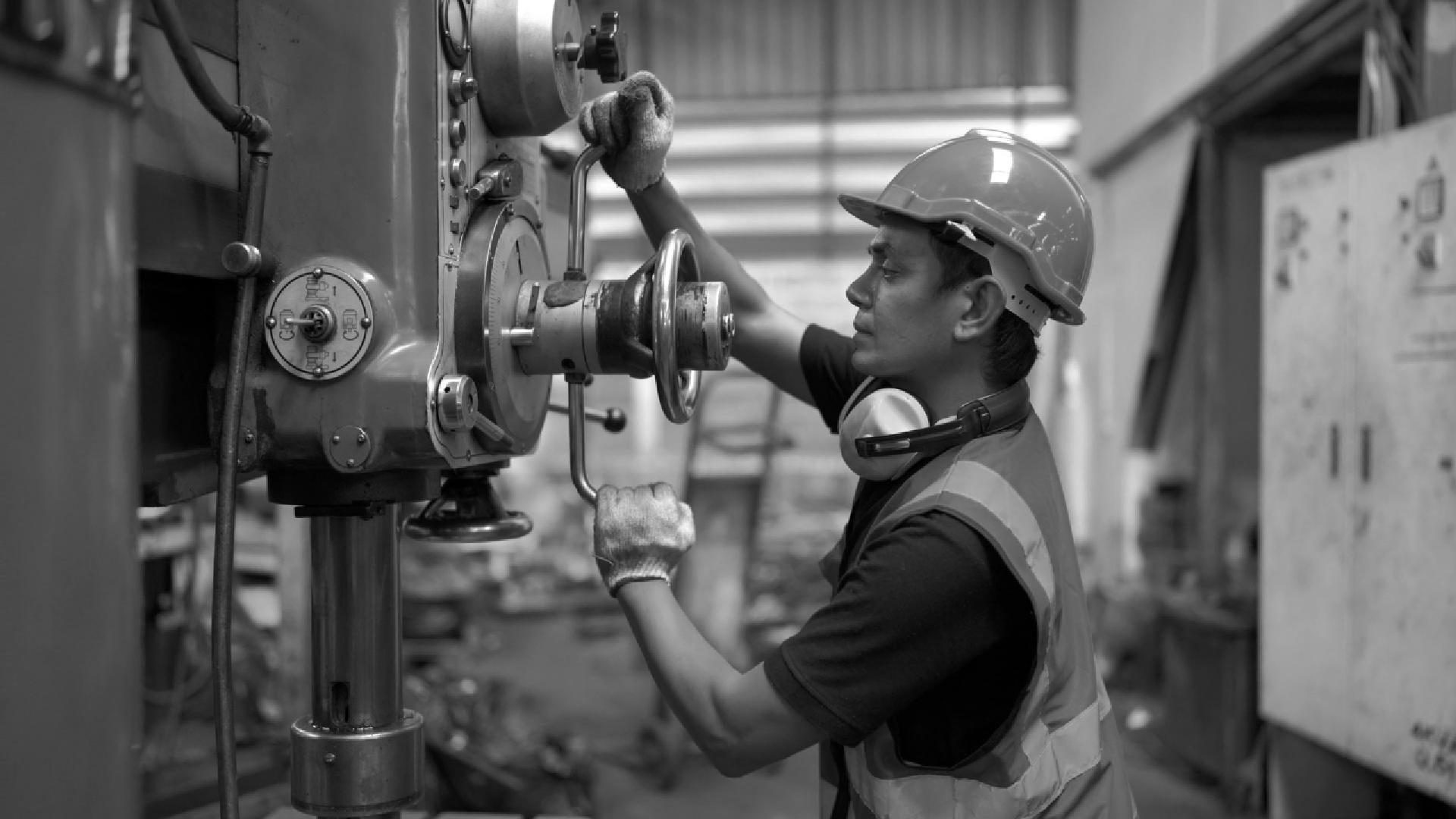
Millwrights are the mechanics of industry — they keep manufacturing plants, power stations, and processing facilities running. The manufacturing renaissance driven by reshoring and semiconductor fab construction is creating strong demand for millwrights in industrial markets across the country.

Sources: BLS OES May 2024 · SOC 49-9044. Individual results vary by industry sector, location, and certification.

Texas median salary
$61,000
Energy and chemical plant sector premium
Texas top 10%
$90,000+
Petrochemical and refinery millwrights
Entry level in Texas
$39,000
First-year helper — TX wage level
TX no income tax
Advantage
Higher effective take-home
Houston area millwrights
~$62,000
Beaumont/Port Arthur area
~$69,000
Dallas area millwrights
~$58,000
Texas-specific: The Gulf Coast petrochemical corridor — from Beaumont to Corpus Christi — is one of the largest concentrations of industrial facilities in the world. Millwrights in the refinery and chemical plant sector earn premium wages, particularly during scheduled turnaround shutdowns when plants bring in additional millwrights for planned maintenance.

Sources: BLS OES May 2023 TX state data · CareerOneStop. City estimates based on BLS metro data.

Illinois median salary
$68,000
Above national median — strong industrial base
Illinois top 10%
$95,000+
Chicago area industrial millwrights
Entry level in Illinois
$42,000
First-year helper — IL wage level
IL market
Industrial
Heavy manufacturing and food processing sectors
Chicago area millwrights
~$68,000
Rockford area millwrights
~$61,000
Peoria area millwrights
~$58,000
Illinois-specific: Illinois has one of the strongest millwright markets in the country due to its heavy manufacturing base — food processing, steel, industrial equipment manufacturing, and chemical production. The Chicago area Millwrights Local 1 operates in one of the highest-wage union markets in the Midwest.

Sources: BLS OES May 2023 IL state data · CareerOneStop. City estimates based on BLS metro data.

Training paths

How to Become a Millwright

Three ways in.
  • Industrial mechanic certificate 12 months. Fastest path into apprenticeship or industrial maintenance.
  • UBC Millwright apprenticeship 4 years. The primary union path to journeyman millwright status.
  • Industrial employer OJT Manufacturers and power plants hire helpers and train them. Slower advancement, employer-funded.
See the full millwright training requirements
Your trade-school advantage
Ready to see your $187K path?
See programs near you that get you there.
See programs near you
Day in the life What the Job Actually Looks Like
+
Day in the life

What the Job Actually Looks Like

6:00 AM
Plant arrival and work orders
Review the day's maintenance work orders or planned installation tasks. Industrial facilities often run 24/7 — millwrights work around production schedules.
7:00 AM
Equipment installation or alignment
Installing new machinery, precision-aligning shafts and couplings with laser tools, or setting conveyor systems. Millwright work demands precision measured in thousandths of an inch.
10:00 AM
Bearing replacement or drive maintenance
Replacing worn bearings, adjusting belt tensions, lubricating drive components. Planned preventive maintenance keeps production lines running.
12:00 PM
Lunch and afternoon work order review
30-minute break. Review afternoon tasks. Emergency breakdowns can change the afternoon plan — production downtime costs companies thousands per hour.
1:00 PM
Emergency breakdown or shutdown work
Responding to a production-down breakdown, or taking advantage of a planned shutdown to do major overhaul work that can't be done during production.
4:00 PM
Closeout and documentation
Complete maintenance records, order parts for upcoming work, update the preventive maintenance schedule. Documentation is critical in regulated industries.
What you will need Skills That Make a Great Millwright
+
What you will need

Skills That Make a Great Millwright

Precision alignment
Laser alignment of shafts, couplings, and pulleys to thousandths of an inch tolerance. Misalignment destroys bearings and costs production plants enormous amounts in downtime.
Mechanical systems knowledge
Understanding gearboxes, conveyors, pumps, compressors, and industrial drives. Millwrights work across the full range of industrial mechanical systems.
Rigging and lifting
Moving heavy equipment with cranes, forklifts, and rigging equipment. Rigging is a safety-critical skill that requires proper training and certification.
Blueprint and drawing reading
Reading equipment drawings, P&ID diagrams, and installation specifications. Industrial machinery comes with detailed documentation that millwrights must interpret.
Hydraulics and pneumatics
Many industrial machines use hydraulic and pneumatic systems for motion control. Understanding fluid power is a core millwright competency.
Problem-solving under pressure
A broken conveyor in a food processing plant or a failed pump in a refinery creates massive pressure to restore production. Fast, accurate diagnosis is the skill that makes millwrights valuable.
Job market outlook The Market for Millwrights in 2026
+
Job market outlook

The Market for Millwrights in 2026

Projected job growth 2024–2034
13%
Much faster than average
New openings per year
5K
Primarily replacement demand from retirements
Current millwright jobs in the US
40K
BLS · 2024
Reshoring opportunity
Growing
Semiconductor and EV manufacturing driving new demand

BLS projects a slight decline in millwright employment overall, but this doesn't tell the full story. The manufacturing reshoring trend — semiconductor fab construction, EV battery plant builds, and domestic industrial investment — is creating new industrial facilities that need millwrights for installation and ongoing maintenance.

Replacement demand from retiring millwrights will generate thousands of openings per year regardless of growth trends. The average millwright workforce is aging, and the pipeline of trained replacements is thin in most industrial markets.

Turnaround work is the high-income opportunity in this trade. When refineries and chemical plants schedule planned shutdowns for major overhaul, they bring in hundreds of additional millwrights at premium rates. Experienced turnaround millwrights can earn $100,000+ in peak years.

Common questions Millwright FAQs
+
Common questions

Millwright FAQs

A millwright is an industrial mechanic who specializes in the installation, alignment, maintenance, and repair of industrial machinery and equipment. They work in manufacturing plants, power generation facilities, refineries, food processing plants, and any other facility with heavy machinery. The term comes from historical work in grain mills.
Millwrights specialize in stationary industrial machinery — conveyors, turbines, pumps, compressors, gearboxes, and similar equipment. Regular mechanics typically work on vehicles. Millwrights use precision alignment tools, rigging equipment, and heavy lifting devices that vehicle mechanics don't encounter.
Not necessarily. Many millwrights work for non-union industrial employers. However, UBC Millwrights union members typically earn higher wages and have better benefits. In major industrial markets — particularly refinery and chemical plant work — union membership is common and advantageous.
The primary industries are oil refining and petrochemicals, food and beverage manufacturing, power generation, paper and pulp mills, automotive manufacturing, steel production, and mining. The semiconductor manufacturing reshoring trend is also creating new demand in high-tech industrial settings.
Yes — and this is a growing segment. Wind turbine installation and maintenance requires millwright skills, particularly alignment and mechanical systems knowledge. Some millwrights specialize entirely in wind turbine work. The trade is expanding into renewable energy as the country's wind capacity grows.
Earn more

Similar Trades That Pay More

What people are saying
The salary data on this site is more detailed than anything I found elsewhere.
AdamGeorgia
I sent this to my nephew who’s considering trades — incredibly thorough.
TonyFlorida
Finally a site that gives real numbers without trying to sell you something.
MattPennsylvania
Your Millwright Career
Starts Here.

We will match you with industrial mechanic programs near you. Free for workers. Always.

Take the Career Quiz → Browse All Trades
START YOUR TRADE CAREER FREE MATCHING · 2 MIN · NO SPAM
Get Matched Free →